Skip to content

Posts tagged ‘book reviews’

Falling Man by Don Delillo

fallingman

Falling Man by Don DeLillo
Published in: 2007
Reviewed by: Jen and Book Worm
Find it here: Falling Man

Synopsis (from Amazon): There is September 11 and then there are the days after, and finally the years.

Falling Man is a magnificent, essential novel about the event that defines turn-of-the-century America. It begins in the smoke and ash of the burning towers and tracks the aftermath of this global tremor in the intimate lives of a few people.

First there is Keith, walking out of the rubble into a life that he’d always imagined belonged to everyone but him. Then Lianne, his estranged wife, memory-haunted, trying to reconcile two versions of the same shadowy man. And their small son Justin, standing at the window, scanning the sky for more planes.

These are lives choreographed by loss, grief, and the enormous force of history.

Brave and brilliant, Falling Man traces the way the events of September 11 have reconfigured our emotional landscape, our memory and our perception of the world. It is cathartic, beautiful, heartbreaking.

Book Worm’s Review:
4 Stars

I think this was an easier read for me than it was for Jen, as I am not American and so had a level of distance from the actual events. For me 9/11 was an horrendous news story like the earthquakes in Japan or the 2012 Tsunami. It scared me, it made me sad, but I was removed from it.

What this book offered was a view not of the horrific events themselves, but the perspective of what happens next. DeLillo chooses to do this by concentrating on one family that lives, works, and goes to school in New York City. Through this family, he shows how what happened has an impact for years after the events and probably forever for those affected.

To me this book made the events more real as it bought them down to an individual human level.

Jen’s Review:
3.5 stars
This was a difficult book for me to read. My husband and I had just moved from NYC shortly before 9/11. He worked in one of the buildings right next to the World Trade Center. We got married two days before 9/11 and we had friends and family flying out of Boston that morning. There was a span of several hours when we didn’t know whether any of our family or friends were on one of the planes. We were lucky because we didn’t lose anyone close to us although my husband’s company lost several people in the attacks. It was only until recently that I even could think about reading a book about the days surrounding 9/11.

DeLillo does a wonderful job capturing the emotional and psychological impact of the events of 9/11 on the lives of New Yorkers. The novel is told alternating perspectives of a man who was in the towers at the time of the attack, his estranged wife, and one of the terrorists. DeLillo bounces back and forth between perspectives and, at times, it can be hard to figure out who we are following at any given time. He also moves around chronologically with the beginning and end of the book taking place in the towers and the middle taking place in the months afterwards. Although the man returns to his family after the events, they continue to be emotionally distant. Each member of the family copes with events in their own ways that further alienate them from other members of the family. The book is well-written, using repetition and alternating narratives to thrust the reader into the mindset of New Yorkers during that time.

Despite all the positives, I had difficulties connecting with the characters (perhaps that was the point) and some parts of the novel dragged. However, I think it can be a valuable book for those who want to learn more about how trauma can impact ordinary people.

Want to try it for yourself? Find it here: Falling Man

Have you read this book? What did you think of it? Have you read any other works by DeLillo?

Go Set a Watchman

covers

Unless you live under a rock, you’ve probably seen some of the controversy surrounding Go Set a Watchman. The “sequel,” released last week, was actually written prior to To Kill A Mockingbird and focuses on Scout as an adult. Harper Lee’s editor liked the childhood flashbacks in Go Set a Watchman and encouraged Lee to rewrite the book focusing on Scout as a child and, thus, To Kill A Mockingbird was born.

Rumors and speculation abound around the “newer” novel. The timing of the book’s release along with information about Lee’s ability to provide informed consent — a drastic shift in position after years of stating she never wanted to publish again — is shady to say the least. You can read more about that here. Lack of informed consent in publishing is not new. Kafka requested that his works be destroyed after his death and he was clear throughout his lifetime that he did not want them published. In addition to issues surrounding informed consent, other controversy surrounds Harper Lee. Some have said that Harper Lee didn’t really write TKAM but rather that the book was written, at least in part, by her childhood friend Truman Capote. The Wall Street Journal published a story about data miners who analyzed both books and debunked the idea that Capote wrote TKAM.

Rumors aside, was it any good? Keep reading to see our thoughts.
Read more

Read Around the World: Zimbabwe

zimbabwe flag

We have returned to Africa for our next stop on our world tour of reading. In scheduling these posts, I have realized that I really like African literature and both of us have read a fair amount of African literature this year. This month we are traveling to Zimbabwe! Keep reading to see which book we picked and what we thought. Read more

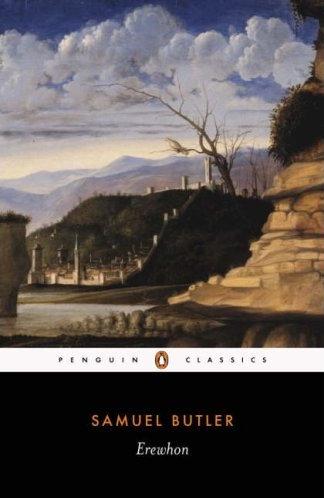
1001 Book Review: Erewhon by Samuel Butler

erewhon-by-butler-book

Erewhon by Samuel Butler
Published in: 1872
Reviewed by: Book Worm and Jen
Find it here:Erewhon (Dover Thrift Editions)

Synopsis (from Amazon): Erewhon (an anagram for “nowhere”) is a faraway land where sickness is a punishable crime, criminals receive compassionate medical treatment, and machines are banned (for fear they’ll evolve and become the masters of man). Butler’s entertaining and thought-provoking Utopian novel takes aim at such hallowed institutions as family, church, and mechanical progress; its remarkable prescience in anticipating future sociological trends adds a special relevance for today’s readers.

Check out our reviews below:
Read more

Love it or Hate it? Stranger in a Strange Land by Heinlein

Have you ever noticed how some books seem to drive a wedge between people? You check the reviews and find almost no middle-of-the-road ratings. Instead people either seem to love it or hate it. Well, welcome to the Love it or Hate it post category! Each month, we’ll pick one book to review and two contributors will battle it out to convince you to pick it up or throw it out. Last month we discussed The Twilight Saga. The votes were closer than I thought. 42% loved it and 35% hated it. Everyone else fell into the “haven’t read it but I’ll pass” category. Many thanks to our Love it reviewer, Nicole R! I (Jen) was the Hate it reviewer.

This month’s selection is on Boxall’s 1001 List of Books to Read before you Die and is considered to be one of the most influential science fiction books ever written. It is also considered to be a highly controversial book for many reasons. So the question is… do you Love it or Hate it? Continue reading to find see our two reviews. Make sure to vote in our poll at the bottom of the post even if you haven’t read it. Read more

Non-1001 Book Review: The Giver by Lois Lowry

the Giver

First published: 1993
Awards: Newbery Medal in 1995
Rating: 3 stars
Reviewed by: Jen
Find it/Buy it here: The Giver

I realize that this will be an unpopular post because everyone I know loves this book with a passion. I’m fully prepared for all your comments to prove me wrong about this book!

The Giver is a young adult/children’s dystopian novel that was published in the early 1990s. It follows the story of a young boy, Jonas, who is living in what initially appears to be a utopian society. When Jonas is selected to become the new “Receiver of Memory” he has to reconcile his new knowledge of how things used to be with the current state of his surroundings. The Receiver of Memory is the one person in the community who must contain all the past memories (painful and joyous) of what life was like prior to their current community. Jonas learns that his utopian society exists exclusively because all emotion, color, memories, and individuality have been eradicated.

I find it hard to rate books that are so clearly intended toward children because the elements I dislike (simplicity of plot) are elements that are needed to appeal to, or be understandable for children.  The book is probably perfect for children ages 9-12. The problem is that as an adult, I felt bored. The story was just too simplistic for my adult tastes although I think as a child I would have loved the story. There’s little in the way of emotional or character development and the whole thing is just a little too cutesy for my tastes. Although young Jonas faces some difficult and heart-wrenching decisions, those decisions never really felt genuinely difficult or heart-wrenching the way it did in other young adult books I’ve read. For example, authors can write about characters feeling pain (emotional or physical) but to truly experience the pain with the characters, the author needs to do more than just say “it was painful.”

Another thing that bothers me is that nothing is ever explained. There are no details about why things are the way they are in this “utopia” or about how the people in charge (whoever they are) are able to control everything. As readers we simply have to take the author’s word for granted many times. Half the time I was shouting “why? why? it doesn’t make sense!”

Like I said earlier, I’m sure I’ll get some push-back for this review since everyone raves about this book. Lots of adults have read it and have encouraged me to read it. Unfortunately, I can’t rave about this book. I think it is a great book for young children because it raises interesting moral issues in a way that may be easy for them to understand. But, I don’t see the appeal of this book for adults. It was entertaining enough, but the lack of complexity drove me crazy. For adults at least, there are many superior books that cover the issues raised in this book in a more interesting and complex manner.

I do highly recommend this book for children. You can find it here: The Giver

Okay, so now it’s your turn to tell me why I’m wrong! What did you think about the book? Did you love it, like it, or dislike it? Why am I wrong?

The Thousand Autumns of Jacob de Zoet

thousand autumnThe Thousand Autumns of Jacob de Zoet by David Mitchell
Published in: 2010
Literary Awards: Man Booker Prize Nominee for Longlist (2010)
Reviewed by Jen
Rating: 3.5 stars
Find it here: The Thousand Autumns of Jacob de Zoet

After reading Cloud Atlas, I avoided all other Mitchell books for many years for fear of being disappointed. Cloud Atlas is one of the books that made it into my list of favorite books which is no small feat. I have over 600 books on my Shelfari bookshelf and only 10 of those books have made it onto my list of favorites. Typically when I love an author, I seek out all their books but I felt differently about my first experience with Mitchell. Cloud Atlas was one of those books that was notable for me because it was unlike anything I had ever read. It was intelligent but in an unpretentious and highly accessible manner. While Cloud Atlas was a great and engaging story, it was the unique way that Mitchell played around with narrative structure, timeline, and genre that made the reading experience so wonderful for me. So when I turned to read The Thousand Autumns of Jacob de Zoet, it was under the shadow of unrealistically high expectations. Read more

Among the Ten Thousand Things by Julia Pierpont

among the ten thousand

Among the Ten Thousand Things by Julia Pierpont
Release Date: July 7, 2015
Reviewed by: Jen
Rating: 4 stars
Pre-order your copy here:Among the Ten Thousand Things

Among Ten Thousand Things is about the events, big and small, that lead to the eventual breakdown of a family. When Jack Shanley’s mistress tries to expose their affair to his wife by mailing her a package with their sexually explicit correspondence, his young daughter intercepts the package and both children read it. The remainder of the book centers around what happens to all members of the family after this event. Each member of the family responds in their own way leading to the eventual breakdown of their family unit. Read more

Non 1001 Book Review: After Dark Haruki Murakami

after dark

After Dark by Haruki Murakami
Published in: 2004
Translated from Japanese by Jay Rubin
Reviewed by: Book Worm
Rating: 4 stars
Find it here: After Dark

Synopsis: (from the Back Cover): Eyes mark the shape of the city

The midnight hour approaches in an almost-empty diner. Mari sips her coffee and reads a book, but soon her solitude is disturbed: a girl has been beaten up at the Alphaville hotel, and needs Mari’s help.

Meanwhile Mari’s beautiful sister Eri lies in a deep, heavy sleep that is ‘too perfect, too pure’ to be normal; it has lasted for two months. But tonight as the digital clock displays 00:00, a hint of life flickers across the television screen, even though it’s plug has been pulled out.

Strange nocturnal happenings, or a trick of the night?

Review: If you read our featured author post you will know that I love Murakami’s writing and this book was no exception. From the moment I read the back cover, I had a happy warm feeling in my tummy. I knew this was going to be a good read. The front cover just calls out to you “read me, read me.” The only problem with this book is that it is short. I could have stayed wandering around Tokyo at night much longer than the time Murakami allowed me.

From the opening lines of the book we, the readers, are told that we are voyeurs. We can watch what happens in the city. We can zoom in on bits that interest us, but we cannot get involved. We cannot influence anything.  We cannot be heard and we are entirely neutral.

The book is set on a midwinter’s night between the hours of 11:56pm and 6:52am in Tokyo. It revolves around 3 central characters: the beautiful Eri who has decided to sleep and not wake up; her intelligent sister Mari who cannot sleep; and Takahashi a young musician who provides a link between the 2 sisters.

While Eri sleeps her beautiful sleep, Mari stays awake in the city where she encounters Takahashi in a Denny’s restaurant. Their meeting leads her to be pulled into the life of the “Night People.” Night people are those who are more at home after the sun has gone down — the insomniacs, prostitutes, and others who prefer the night.

While there is some action in this book, it’s more about feelings and perceptions than about plot development. There is violence and vengeance, and in true Murakami style there are mystical and magical moments and cats!! How do you know you are reading a Murakami? Because there are always cats.

This is a stylized book and I can easily see it being made into a noir film as the story really lends itself to the visual.

For those who like a proper ending with all the loose ends tied up, this is not the book for you (nor is any other Murakami book). There are several mysterious events that are not explained and are just left dangling when the sun rises. Murakami has created a place that exists only after dark and so until the next time the sun sets the mysteries will have to stay mysteries.

Want to try if for yourself? You can find it here: After Dark

We want to hear from you. Have you read this book? What did you think? Do you like Murakami’s books?

1001 Book Review: Transit Anna Seghers

transit

Transit by Anna Seghers
Published in: 1944
Reviewed by Jen & Book Worm
Find it here:Transit (New York Review Books Classics)

Synopsis (from Amazon): Anna Seghers’s Transit is an existential, political, literary thriller that explores the agonies of boredom, the vitality of storytelling, and the plight of the exile with extraordinary compassion and insight.
Read more