Skip to content

Posts from the ‘BW’s Reviews’ Category

Non 1001 Book Review: The Gap of Time Jeanette Winterson

The-Gap-of-Time

The Gap of Time by Jeanette Winterson
Published in 2015. Part of the Hogarth Shakespeare Retold series
Reviewed by Book Worm
Rating 5 stars
Find it here: The Gap of Time: A Novel (Hogarth Shakespeare)

Amazon synopsis: The Winter’s Tale is one of Shakespeare’s “late plays.” It tells the story of a king whose jealousy results in the banishment of his baby daughter and the death of his beautiful wife. His daughter is found and brought up by a shepherd on the Bohemian coast, but through a series of extraordinary events, father and daughter, and eventually mother too, are reunited.

In The Gap of Time, Jeanette Winterson’s cover version of The Winter’s Tale, we move from London, a city reeling after the 2008 financial crisis, to a storm-ravaged American city called New Bohemia. Her story is one of childhood friendship, money, status, technology and the elliptical nature of time. Written with energy and wit, this is a story of the consuming power of jealousy on the one hand, and redemption and the enduring love of a lost child on the other. Read more

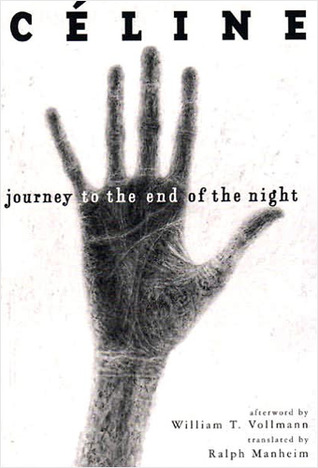
1001 Book Review: Journey to the End of the Night Louis-Ferdinand Céline


12395

Journey to the end of the Night by Louis-Ferdinand Céline
Published in: 1932
Reviewed by: Book Worm
Rating: ★★★
Find it here: Journey to the End of the Night

Synopsis from Goodreads: Louis-Ferdinand Céline’s revulsion and anger at what he considered the idiocy and hypocrisy of society explodes from nearly every page of this novel. Filled with slang and obscenities and written in raw, colloquial language, Journey to the End of the Night is a literary symphony of violence, cruelty and obscene nihilism. This book shocked most critics when it was first published in France in 1932, but quickly became a success with the reading public in Europe, and later in America where it was first published by New Directions in 1952. The story of the improbable yet convincingly described travels of the petit-bourgeois (and largely autobiographical) antihero, Bardamu, from the trenches of World War I, to the African jungle, to New York and Detroit, and finally to life as a failed doctor in Paris, takes the readers by the scruff and hurtles them toward the novel’s inevitable, sad conclusion.

Book Worm’s Review: I really struggled with this book and it felt much longer than its already long 600 odd pages. The main problem I had was that this was a first person narrative told from the point of view of French man Ferdinand Bardamu who I just couldn’t relate to. The narrative jumps around and lacks narrative consistency consistency. Unfortunately, it really comes down to the fact that I found most of it boring.

The book is jam packed with footnotes which were all essential to understanding the story. For example, many of the footnotes revealed the “in” jokes  that Céline was using — references that would have gone unnoticed by those of us not familiar with Paris. For the reader who understood those references this is probably a very amusing book.

I gave this 3 stars due to the fact that while I may not have enjoyed it, it is nowhere near as bad as some of the books the 1001 list has forced me to read so far.

I think the kind of reader who would enjoy this book would be someone who is very knowledgeable about France and Paris in particular. It would also suit those with a dark sense of humor as some of the darker events could be viewed as humorous.

What do you think? Want to try it for yourself? You can find a copy here: Journey to the End of the Night

We want to hear from you! Have you read this book? What did you think? 

2015 Man Booker Shortlist: A Brief History of Seven Killings Marlon James

brief

The Man Booker Prize will be announced next tuesday. Monday we will make our final prediction for winner. Before we do so, we wanted to post a final review for one of the books that has been shortlisted. Find out what Book Worm thought about James’ A Brief History of Seven Killings. Read more

Man Booker Longlist 2015: The Year of the Runaways Sunjeev Sahota

Sunjeev_Sahota_The_Year_of_the_Runaway

Less than 1 week away from the shortlist announcement and we actually might make it through the entire list! This last week has been a rush to get them all finished before the 15th. We’ll go back to our usual 3 days per week posting schedule as soon as we are  done with the long list books. Next up… The Year of the Runaways by Sahota. Will this make our short list? Read more

2015 Man Booker Longlist: The Illuminations by Andrew O’Hagan

illuminations

Next up in attempt to make our way through the 2015 Man Book Longlist books is O’Hagan’s The Illuminations. Keep reading to see if it is a contender for our shortlist. Read more

Man Booker Longlist 2015: A Spool of Blue Thread Anne Tyler

sppo

Next up in on our long list reads is Anne Tyler’s A Spool of Blue Thread. Find out what I thought about it and where it ranks. Read more

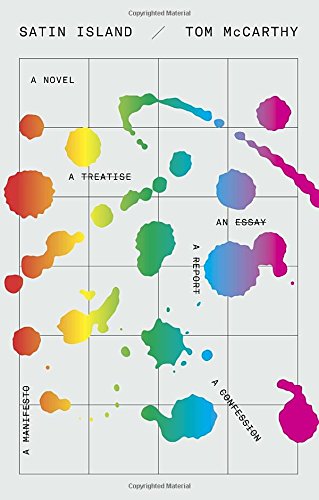
2015 Man Booker Long List: Satin Island Tom McCarthy

satin island

Satin Island by Tom McCarthy
Published: Feb, 2015
Reviewed by: Book Worm
Find it here: Satin Island

Synopsis (from Amazon): U., a “corporate anthropologist,” is tasked with writing the Great Report, an all-encompassing ethnographic document that would sum up our era. Yet at every turn, he feels himself overwhelmed by the ubiquity of data, lost in buffer zones, wandering through crowds of apparitions, willing them to coalesce into symbols that can be translated into some kind of account that makes sense. As he begins to wonder if the Great Report might remain a shapeless, oozing plasma, his senses are startled awake by a dream of an apocalyptic cityscape.

In Satin Island, Tom McCarthy captures—as only he can—the way we experience our world, our efforts to find meaning (or just to stay awake) and discern the narratives we think of as our lives.

Book Worm’s Review: The novel is written as a stream of consciousness from the point of view of U, an anthropologist employed to essentially make sense of humanity. As such, there is only really one character and very little character development.

I enjoyed the writing the way every day occurrences can be transformed by viewing at a distance and the poetical descriptions the author uses.The plot is original in the way that it attempts to explain humanity through statistics and in the building of the argument that our lives are predetermined on a global scale by the technology we use everyday.

What I didn’t like was the fact that something suspicious or devious was hinted at but then never developed. I would have liked a deeper mystery element to the plot. I also found the ending disappointing. It just kind of fizzled out like a damp firework.

In terms of originality this would probably make my shortlist, but in terms of enjoyment it may get knocked out. Here is my scoring for this book:

Available in English 1/1
Published in the UK 1/1
Originality 5/8
Character Complexity 2/5
Writing Quality 4/5
Total: 13/20

Want to try it for yourself? You can find a copy here: Satin Island

Have you this book? What did you think? Should it make the shortlist?

Here is my ranking of long list books so far in descending order of preference:

  1. Lila (15/20)
  2. Satin Island (13/20).

Check back this Friday to see what we both thought of Enright’s The Green Road.

The Bird Artist by Howard Norman

af3d99ff21a4bef3402e3e39a7e1cfdd

The Bird Artist by Howard Norman
Published in: 1994
Literary Awards: Finalist for the 1994 National Book Award
Reviewed by: Book Worm
Rating: ★★★
Find it here: The Bird Artist: A Novel

Set in Witless Bay in Newfoundland, a remote community, this is the story of how love and passion can end in murder.

Fabian Vas is a bird artist: He draws and paints the birds of Witless Bay, his remote Newfoundland coastal village home.  In the first sentence of the novel Fabian confesses to having killed the lighthouse keeper, Botho August. The rest of the narrative works backwards showing what events lead to the murder and how Fabian escaped hanging to tell his story.

The book is studded with detailed descriptions of the bird life in Witless bay and indeed the bay itself is a character, with its isolation allowing certain events to take place and for community justice to take the place of the law.

I gave this book 3 stars because I didn’t really connect with any of the characters. They were all unlikeable in some way and I really find it hard to like a book where you can’t connect with a single character. What I did enjoy were the descriptions of nature, of the bird species, and of the harsh landscape of the island — landscape that made the inhabitants the kind of remote, cold people they were.

After finishing this book I discovered it was the first in a trilogy which seems rather strange to me since this book seemed to provide the complete story of Fabian, albeit it possibly a slightly surface view. This was not a book that ended on a cliffhanger or that left me with any burning unanswered questions. Instead, everything was all tied up nicely and in such a way that I don’t feel compelled to read the next 2 books — which probably says it all.

Want to try it for yourself? You can find a copy here: The Bird Artist: A Novel

We want to hear from you. Have you read this book? What did you think? Do you want to read it?

Book vs Movie: Blade Runner vs Do Androids Dream of Electric Sheep?

Welcome to our new recurring post: Book vs. movie! Unlike our other recurring themes, this won’t be scheduled for a set date but rather will be posted when the inspiration strikes. We’re book lovers so chances are we’ll be biased toward the books, but there are several cases we can think off when we’ve preferred the movie to the book. I’ll start us off with our first battle pairing. We hope you chime in with your thoughts!

electic-sheep Read more

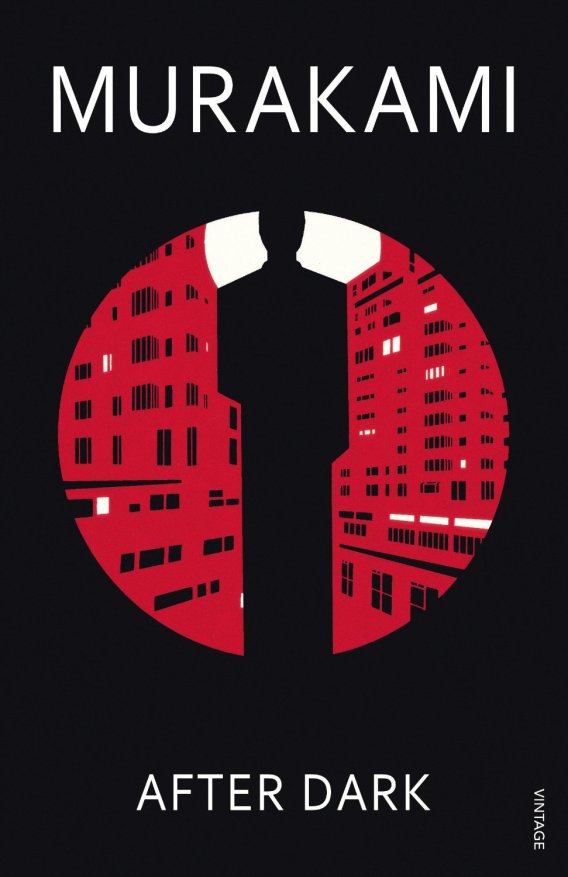
Non 1001 Book Review: After Dark Haruki Murakami

after dark

After Dark by Haruki Murakami
Published in: 2004
Translated from Japanese by Jay Rubin
Reviewed by: Book Worm
Rating: 4 stars
Find it here: After Dark

Synopsis: (from the Back Cover): Eyes mark the shape of the city

The midnight hour approaches in an almost-empty diner. Mari sips her coffee and reads a book, but soon her solitude is disturbed: a girl has been beaten up at the Alphaville hotel, and needs Mari’s help.

Meanwhile Mari’s beautiful sister Eri lies in a deep, heavy sleep that is ‘too perfect, too pure’ to be normal; it has lasted for two months. But tonight as the digital clock displays 00:00, a hint of life flickers across the television screen, even though it’s plug has been pulled out.

Strange nocturnal happenings, or a trick of the night?

Review: If you read our featured author post you will know that I love Murakami’s writing and this book was no exception. From the moment I read the back cover, I had a happy warm feeling in my tummy. I knew this was going to be a good read. The front cover just calls out to you “read me, read me.” The only problem with this book is that it is short. I could have stayed wandering around Tokyo at night much longer than the time Murakami allowed me.

From the opening lines of the book we, the readers, are told that we are voyeurs. We can watch what happens in the city. We can zoom in on bits that interest us, but we cannot get involved. We cannot influence anything.  We cannot be heard and we are entirely neutral.

The book is set on a midwinter’s night between the hours of 11:56pm and 6:52am in Tokyo. It revolves around 3 central characters: the beautiful Eri who has decided to sleep and not wake up; her intelligent sister Mari who cannot sleep; and Takahashi a young musician who provides a link between the 2 sisters.

While Eri sleeps her beautiful sleep, Mari stays awake in the city where she encounters Takahashi in a Denny’s restaurant. Their meeting leads her to be pulled into the life of the “Night People.” Night people are those who are more at home after the sun has gone down — the insomniacs, prostitutes, and others who prefer the night.

While there is some action in this book, it’s more about feelings and perceptions than about plot development. There is violence and vengeance, and in true Murakami style there are mystical and magical moments and cats!! How do you know you are reading a Murakami? Because there are always cats.

This is a stylized book and I can easily see it being made into a noir film as the story really lends itself to the visual.

For those who like a proper ending with all the loose ends tied up, this is not the book for you (nor is any other Murakami book). There are several mysterious events that are not explained and are just left dangling when the sun rises. Murakami has created a place that exists only after dark and so until the next time the sun sets the mysteries will have to stay mysteries.

Want to try if for yourself? You can find it here: After Dark

We want to hear from you. Have you read this book? What did you think? Do you like Murakami’s books?