Skip to content

Posts from the ‘1001 reviews’ Category

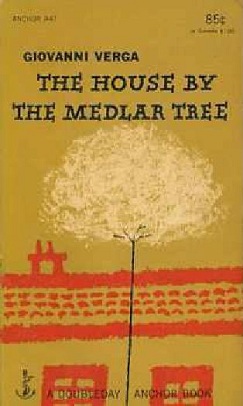
1001 Book Review: House by the Medlar Tree

house by the medlar tree_book cover

The House by the Medlar Tree (I Malagovia) Giovanni Verga
First Published in: 1881
Original language: Italian
Find it/buy it here: The House By the Medlar Tree (Classic Reprint)

Synopsis (from Amazon)
Realist (verismo) novel of Sicilian life by Giovanni Verga, published in 1881 as I Malavoglia. The book concerns the dangers of economic and social upheaval. It was the first volume of a projected five-novel series that Verga never completed. The author’s objective narrative and extensive use of dialogue to advance the action and reveal character represented a new style in Italian fiction. The action centers on the Malavoglia family, who borrow money from the local usurer against unreceived goods they expect to resell. When the shipment is lost at sea, the family must nonetheless repay the debt. A series of setbacks and losses follow, as the family encounters trouble from every quarter. The house is lost and heroic sacrifices are required of both the men and women until the debt is repaid. At the novel’s end the family retakes possession of the house by the medlar tree.
Read more

1001 Book Review: Hawksmoor by Ackroyd

Hawksmoor

Hawksmoor by Peter Ackroyd
First published: 1985
Format: Audiobook narrated by Derek Jacobi
Reviewed by: Jen
Rating: ★★★

In the 18th century Nicholas Dyer, an architect, and secret devil worshiper, is commissioned to build seven London churches. In the 1980s, detective Nicholas Hawksmoor is investigating a series of gruesome murders that took place in the sites of those same seven churches. Hawksmoor alternates between the two time periods and Ackroyd uses different styles to reflect “modern” day language and 18th century language. As the story progresses, readers begin to piece recognize patterns and connections between the two periods.

Nicholas Dyer is loosely based on real life architect Nicholas Hawksmoor (I wish I had known this prior to reading the book – notice the overlapping names of characters) who worked with Sir Christopher Wren (also mentioned in Ackroyd’s book). The real Nicholas Hawksmoor was a free mason who incorporated pagan symbols into his churches and did in fact build the 7 churches mentioned in the book. The Guardian published an interesting piece on Hawksmoor and his churches. Scroll down the bottom of this review to see images of the 7 churches.

Let me begin by saying that audio is the wrong format with which to tackle this book. The book is confusing, the author jumps around between time periods, some names are similar across time periods, and the narrator does not do a good job of distinguishing between voices.

Now on to my review… Read more

1001 Book Review: Crash J G Ballard

Crash

Crash by J.G. Ballard
First Published: 1973
Joint review: Jen & Book Worm

Synopsis: When Ballard, our narrator, smashes his car into another and watches the driver die, he finds himself drawn with increasing intensity to the mangled impacts of car crashes. Robert Vaughan, a former TV scientist turned nightmare angel of the expressway, has gathered around him a collection of alienated crash victims and experiments with a series of auto-erotic atrocities, each more sinister than the last. But Vaughan craves the ultimate crash – a head-on collision of blood, semen, engine coolant and iconic celebrity.

First published in 1973, ‘Crash’ remains one of the most shocking novels of the twentieth century and was made into an equally controversial film by David Cronenberg.

Jen’s Review: Read more

1001 Book Review: Flaubert’s Parrot

IMG_2919

Flaubert’s Parrot by Julian Barnes
First Published in: 1984
Reviewed by: Book Worm and Jen

Synopsis (from book jacket): Which of two stuffed parrots was the inspiration for one of Flaubert’s greatest stories? Why did the master keep changing the color of Emma Bovary’s eyes? And why should these minutiae matter so much to Geoffrey Braithwaite, the crankily erudite doctor who is the narrator of this tour de force style and imagination?

In Flaubert’s Parrot, Julian Barnes, who has been compared with writers such as Joyce and Calvino, spins out a mystery, an exuberant metafictional inquiry into the ways in which art mirrors life and then turns around to shape it; a look at the perverse autopsies that readers perform on books an lovers perform on their beloved; and a piercing glimpse at the nature of obsession and betrayal both scholarly and romantic.

A compelling weave of fiction and imaginatively ordered fact, Flaubert’s Parrot is by turns moving and entertaining, witty and scholarly, and a tour de force of seductive originality

Bookworm’s Review
Rating: ★★★

Flaubert’s Parrot deals with Flaubert, parrots, bears and railways; with our sense of the past and our sense of abroad; with France and England, life and art, sex and death, George Sand and Louise Colet, aesthetics and redcurrant jam; and with its enigmatic narrator, a retired English doctor, whose life and secrets are slowly revealed.
Read more

1001 Review: Rites of Passage by William Golding

ritesofpassage

Rites of Passage by Golding
First published in: 1980
Winner of Man Booker Prize in 1980
Reviewed by: Jen
Rating: ★★★★

Rites of Passage is the first book in Golding’s To the Ends of the Earth trilogy and it won the Man Booker prize in 1980. It is written in the form of a travel journal and it documents Edmund Talbot’s sea voyage from England to Australia. Mr. Talbot is the godson of an English nobleman and he writes the journal in order to share his experiences of the voyage with his godfather. Initially, he uses the journal to describe the setting, the passengers, and his experience experience on board the ship, but the journal ultimately describes the tragic downfall of one passenger: Parson Colley. The novel is a clever commentary about class, bullying, and man’s complicity in the downfall of others. The reader quickly learns that the ship is a microcosm of British society. The lower class passengers are in a separate section from the aristocracy and treatment of the officers is determined by where passengers fall on the social class spectrum. It is part coming of age story and part social commentary.

I was skeptical about this book because I don’t care for swashbuckling, sea voyage, sailing, types of books. However, while the entire story is set during a sea voyage, the plot is not at all focused on the voyage. I thought that Golding does a wonderful job in creating a sense of discomfort in the reader by flipping the switch on our perspective from identification with Talbot (to mild degree) to compassion and identification with Colley. Initially, we are made complicit in the atmosphere of bullying. For example, we are made to feel the absurdity of the parson — the image of him as a bumbling, weak, and awkward man permeates our viewpoint. We find humor in his struggles to gain the favor of the Captain and to gain his sea legs. Then Golding turns the tables on us and we are made to see how the initial light and humorous tone turned into cruelty, leading us to question our roles as readers in finding early events humorous.

The commentary of class, a central theme of this book, is interesting. Social prejudice is rampant and once again Golding turns the table on readers. Characters who are seen as moral and noble (the upper class passengers) are shown to be course and cruel and vice versa.

Finally, I enjoyed picking up on similarities between this book and Lord of the Flies. Golding seems to like themes about man’s isolation and how behaviors emerge in the context of removal from “civilized” society. The writing is solid with an interesting blend of humor and tragedy. It is a book that I was surprised I enjoyed so much and that I would be happy to recommend to others.

Overall: A very engaging and thought-provoking read.

BBC also has a series based on these books. You can find it on netflix. It is supposed to be quite good.

Want to read it? You can purchase it from Amazon by clicking: Rites of Passage (To the End of the Earth)

NOTE: If you do buy your copy from Amazon, don’t get the $1.42 ebook version. I originally bought this copy and it was filled with formatting issues and mistakes. I returned it for a refund and bought the $7.00 version and didn’t have any problems with that version. But, then when I tried to find it again, they only had the $1.42 version listed. So, I’d recommend the paper copy or try your local library.
 

Read around the World: Canada

canada_flag_1110335_fullwidth We are starting off our book tour of the world in Canada. Here are some fun facts about Canada (feel free to add your own facts in the comments section):

  • The name Canada comes from the word ‘Kanata’ which means settlement or village in the language of the indigenous St Lawrence Iroquoians.
  • It is the second largest country in the world by area, but has the fourth lowest population density. It has the longest coastline of any country in the world.
  • Winter temperatures can drop below -40C in some parts of the country. The lowest record temperature in Canada was -63C (-81F) on Feb 3rd, 1957 in Snag Yukon.
  • Famous Canadian authors include Lucy Maud Montomory (Anne of Green Gables), Margaret Atwood, Alice Munro, Mavis Gallant, Stephen Leacock, Pierre Berton, Robertson Davies, Douglas Copeland, Alistair MacLead, Farley Mowat, Yann Martel, Carol Shields, and Michael Ondaantje.
  • It has a literacy rate of over 99%

Book Selected: Surfacing by Margaret Atwood Read more

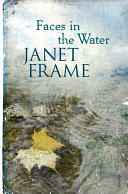
1001 Book Review Faces in the Water Janet Frame

facesinthewater

“I was now an established citizen with little hope of returning across the frontier; I was in the crazy world, separated now by more than locked doors and barred windows from the people who called themselves sane.’

When Janet Frame’s doctor suggested that she write about her traumatic experiences in mental institutions in order to free herself from them, the result was Faces in the Water, a powerful and poignant novel.
Read more

Love it or Hate it: Atonement

Have you ever noticed how some books seem to drive a wedge between people? You check the reviews and find almost no middle-of-the-road ratings. Instead people either seem to love it or hate it. Well, welcome to the new Love it or Hate it post category! Each month, we’ll pick one book to review. Two contributors will battle it out to convince you to pick it up or throw it out. Our February book is Atonement by Ian McEwan.

Special thanks to guest contributor Nicole R for writing one of the points of view this month!

Make sure to read to the end and cast your vote. And to celebrate our first Love it or Hate it category we are giving away a gently used copy of the book to one randomly selected person who writes in with a comment saying “I want it.” Read more

Ulysses by James Joyce

Ulysses

4/5 stars (2 stars for overall enjoyment)

Ulysses is considered to THE modernist novel. Divided into 18 episodes, the novel is loosely based on Homer’s the Odyssey. Events and characters from the Odyssey are transformed into events and characters within a 24-hour period in Dublin in the early 1900s. The majority of the novel uses stream-of-consciousness and follows protagonist Leopold Bloom who represents Odysseus. However, each episode uses a different type of technique and much of it seems chaotic and unstructured on first read. Within the book you’ll find an episode written in the style of a play, one episode written as a series of questions and answers, one written as a series of hallucinations, one in a pompous, old fashioned style, and one episode representing the gestation of the English language –where Joyce starts off with more archaic styles then ends with slang all within the same chapter.

Read more