Skip to content

Read Around the World: Zimbabwe

zimbabwe flag

We have returned to Africa for our next stop on our world tour of reading. In scheduling these posts, I have realized that I really like African literature and both of us have read a fair amount of African literature this year. This month we are traveling to Zimbabwe! Keep reading to see which book we picked and what we thought. Read more

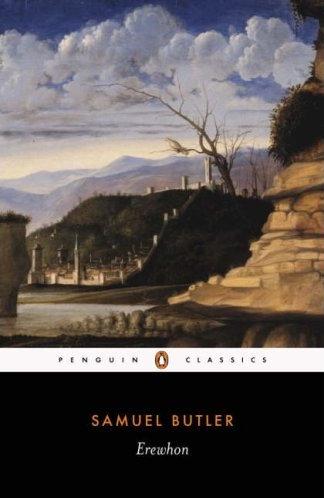
1001 Book Review: Erewhon by Samuel Butler

erewhon-by-butler-book

Erewhon by Samuel Butler
Published in: 1872
Reviewed by: Book Worm and Jen
Find it here:Erewhon (Dover Thrift Editions)

Synopsis (from Amazon): Erewhon (an anagram for “nowhere”) is a faraway land where sickness is a punishable crime, criminals receive compassionate medical treatment, and machines are banned (for fear they’ll evolve and become the masters of man). Butler’s entertaining and thought-provoking Utopian novel takes aim at such hallowed institutions as family, church, and mechanical progress; its remarkable prescience in anticipating future sociological trends adds a special relevance for today’s readers.

Check out our reviews below:
Read more

Love it or Hate it? Stranger in a Strange Land by Heinlein

Have you ever noticed how some books seem to drive a wedge between people? You check the reviews and find almost no middle-of-the-road ratings. Instead people either seem to love it or hate it. Well, welcome to the Love it or Hate it post category! Each month, we’ll pick one book to review and two contributors will battle it out to convince you to pick it up or throw it out. Last month we discussed The Twilight Saga. The votes were closer than I thought. 42% loved it and 35% hated it. Everyone else fell into the “haven’t read it but I’ll pass” category. Many thanks to our Love it reviewer, Nicole R! I (Jen) was the Hate it reviewer.

This month’s selection is on Boxall’s 1001 List of Books to Read before you Die and is considered to be one of the most influential science fiction books ever written. It is also considered to be a highly controversial book for many reasons. So the question is… do you Love it or Hate it? Continue reading to find see our two reviews. Make sure to vote in our poll at the bottom of the post even if you haven’t read it. Read more

Non-1001 Book Review: The Giver by Lois Lowry

the Giver

First published: 1993
Awards: Newbery Medal in 1995
Rating: 3 stars
Reviewed by: Jen
Find it/Buy it here: The Giver

I realize that this will be an unpopular post because everyone I know loves this book with a passion. I’m fully prepared for all your comments to prove me wrong about this book!

The Giver is a young adult/children’s dystopian novel that was published in the early 1990s. It follows the story of a young boy, Jonas, who is living in what initially appears to be a utopian society. When Jonas is selected to become the new “Receiver of Memory” he has to reconcile his new knowledge of how things used to be with the current state of his surroundings. The Receiver of Memory is the one person in the community who must contain all the past memories (painful and joyous) of what life was like prior to their current community. Jonas learns that his utopian society exists exclusively because all emotion, color, memories, and individuality have been eradicated.

I find it hard to rate books that are so clearly intended toward children because the elements I dislike (simplicity of plot) are elements that are needed to appeal to, or be understandable for children.  The book is probably perfect for children ages 9-12. The problem is that as an adult, I felt bored. The story was just too simplistic for my adult tastes although I think as a child I would have loved the story. There’s little in the way of emotional or character development and the whole thing is just a little too cutesy for my tastes. Although young Jonas faces some difficult and heart-wrenching decisions, those decisions never really felt genuinely difficult or heart-wrenching the way it did in other young adult books I’ve read. For example, authors can write about characters feeling pain (emotional or physical) but to truly experience the pain with the characters, the author needs to do more than just say “it was painful.”

Another thing that bothers me is that nothing is ever explained. There are no details about why things are the way they are in this “utopia” or about how the people in charge (whoever they are) are able to control everything. As readers we simply have to take the author’s word for granted many times. Half the time I was shouting “why? why? it doesn’t make sense!”

Like I said earlier, I’m sure I’ll get some push-back for this review since everyone raves about this book. Lots of adults have read it and have encouraged me to read it. Unfortunately, I can’t rave about this book. I think it is a great book for young children because it raises interesting moral issues in a way that may be easy for them to understand. But, I don’t see the appeal of this book for adults. It was entertaining enough, but the lack of complexity drove me crazy. For adults at least, there are many superior books that cover the issues raised in this book in a more interesting and complex manner.

I do highly recommend this book for children. You can find it here: The Giver

Okay, so now it’s your turn to tell me why I’m wrong! What did you think about the book? Did you love it, like it, or dislike it? Why am I wrong?

Author Interview: Amita Trasi

color of our sky
In May I had the pleasure of reading Amita Trasi’s debut novel, The Color of Our Sky, a beautifully rendered and inspiring story of an improbable friendship set against the dark underbelly of human trafficking. You can read my full review of her novel here and I hope you pick up a copy for yourself!

In addition to writing a wonderful book, Amita was kind enough to take time out of her busy schedule to answer some questions about her book and herself. Check  them out

Amita-TrasiThe Color of Our Sky is your debut novel. Can you tell us a little bit about how you prepared for writing the book (e.g., your writing process, the research, etc.)?

It wasn’t a very straightforward process. I didn’t really start off knowing that I’d write about the Devdasi cult that still exists in India. I wanted to write about the friendship between two girls from different caste/class systems (inspired by my own experience). So, that’s where I began.

I started writing from their birth in different caste systems (in a village vs. a city) and I wrote detailed scenes with them growing up and retaining their friendship for three decades. The characters actually took me to where the story is now. I wrote more than 300 pages just to get to know my characters. Once I knew my characters well enough, and knew the story I wanted to tell, I got rid of more than half the writing, and reworked through many drafts to start the novel at critical points in each character’s life.

I like to keep my characters very human because we all struggle with complex emotions at some point in our lives that often influences the path we take. The challenging part was to make the two characters sound different—Mukta had to exhibit a kindhearted, generous and humble nature while Tara had to be bold and high-spirited. I must say, I found it easier to write Mukta’s storyline. Her character just drew me in and I really felt for her. It was emotionally draining to write some of the traumatic/difficult scenes.

From a research stand point, I have ben following the work of many NGO’s who have been successful in rescuing many girls/women from the human trafficking business— one in particular being the Apne Aap foundation in India. This is an area I truly care about and is close to my heart. Their work truly inspires me and a lot of my research comes from what they’ve done.

You mention on your website that you were inspired to write this story in part due to your experiences with the daughter of a servant who worked for your family. Why did you decide to add the element of the Devdasi into her storyline?

Yes, I set out to write about a friendship between two girls and the character of Mukta was inspired by the girl, Shaku, who I met when I was nine years old. There are many elements of Shaku in Mukta including her generous and kind nature. As for the Devdasi storyline, I suppose when I was writing, the character of Mukta just took me there. Ending child sexual slavery is a cause I care about. So I suppose something in me was screaming to let a voice like Mukta be heard.

Mukta and Tara are both very resilient and strong women. Did you model them after anyone specific? Do you see elements of yourself in Tara (seeking redemption for girls like Mukta)?

Mukta has elements of Shaku and yes, Tara does have some elements of me but she is a very different character in her own right. I think more than anything else, with Tara, I wanted to show a child who is caught between her mother’s old fashioned ways and her father’s need for doing what is right. This leaves her confused about her own compassion toward Mukta. At one level, she justifies her compassion by telling herself she is being loyal to her father and at another, she feels guilty that she even feels compassion for someone like Mukta. I think these are very complex emotions for anyone to handle, let alone a child.

As for seeking redemption for girls like Mukta, I do my bit. I think everyone has their own role to play. Spreading awareness, participating in fundraisers etc all contribute toward the cause. I don’t think we are all cut out to get out there and raid brothels. It can be emotionally wrecking for people who aren’t cut out for it. But I do think we can support people who are actually at the forefront in whatever way possible- volunteering, donations etc

Mukta and Tara develop a strong friendship despite their caste differences. Do you feel that these sorts of friendships are possible in India today?

In my opinion, it could be possible in cities where the lower castes have acquired a middle class “status” due to their education or rise in income and there are enough open minded people to accept such friendships. But if the lower caste child belongs to the poorer sections of society, such a friendship would be highly impossible, even in a city. The caste division is deeply ingrained in the day to day life of villagers in the rural areas. But I am hoping such friendships are possible on the sly.

You write some very difficult scenes in your book and while you never shy away from the darker elements, you chose not to be overly graphic or explicit in your descriptions of sexual abuse or violence (something I appreciated). Was this a conscious decision?

Yes, very much so. I don’t believe any scene of sexual abuse or violence has to be overly explicit or graphic in any way to get the point across. Readers are very intelligent people and I trust their intelligence. During my research, I came across some really horrendous and indescribable events in children’s lives. I haven’t described even a fourth of those horrors. As a woman, I have tried to be sensitive in portraying the abuse of a child, and as writer I have tried to deliberately weave words such that it cushions the blow. I believe these are some hard and bitter facts that have to be said— it’s a topic that needs to be heard. If we don’t want to hear of what is happening out there in the world, what chance do we have of helping in whatever way we can or even bring about a change in the slightest way?

In many ways The Color of Our Sky is an uplifting story that inspires hope, but it also highlights a social system with negative qualities. What do you hope is the main message that readers come away with after reading this book?

Well, you said it—- I hope it inspires hope. A hope that girls like Mukta out there have the support of people whose constant endeavor is to save such girls.

And a few questions about you as a writer and reader. Which authors inspire you?

I love writing that’s poetic. I am also drawn to writing that can embrace a simple emotion and present it in a way that you can feel it in your bones. The authors who really do this for me are: Arundhati Roy, Elizabeth Strout, Khaled Hosseini, Abraham Verghese, Alice Munro— just to name a few.

What books do you currently have on your nightstand?

Oh, I have quite a few. I read different genres as long as the writing is good. I just finished The Girl on the Train by Paula Hawkins. I am listening to The Hypnotists Love Story via Audible and reading The Storied Life of A.J. Fikry on my Kindle. I also have a paperback of Eckhart Tolle’s The Power of Now which I go back to from time to time.

Do you have any strange writing habits?

Not really. I just write when I feel like it which is most of the time. My friends do complain that I go into a sort of “creative haze” when I am working on something and essentially become a recluse —their words, not mine.

Are you working on, or do you have plans for another book?

Yes, but I wonder if it’s too early to say anything about the book. I can clearly see it’s going to be a love story in a time of conflict but ideas change and the pattern of a plot often changes along the way.

Is there anything else you would like to share about yourself or your book with readers? 

I wrote this novel because I really wanted to bring to light the life of a girl like Mukta (not that there haven’t been other authors who have done it before me). I find fiction to be a great way of getting us closer to a character and delving into their lives. For me, this book was really a means of creating awareness about human trafficking. So, as readers, if you have the opportunity and the means, please do consider donating to organizations who are involved in helping such kids.

There are many organizations that help girls like Mukta:

Are you intrigued? You can now pick up a copy of Amita’s debut novel, The Color of Our Sky. I encourage you to try it for yourself. Find it here: The Color of our Sky

June Monthly Recap

pile-of-books

It’s time for our monthly recap. Find out which books were favorites, which were duds, and which ones we plan to read the following month. We’ll end our wrap up with a calendar of book-related events/facts from the Month of June and we’ll highlight our upcoming July content. We also want to hear from you so let us know what you read in June and what you look forward to reading in July. Read more

Reading after Baby

A close friend recently posted a request for reading recommendations on her Facebook page. I responded with some admittedly embarrassing recommendations which I won’t list here again but, suffice it to say, they were mostly within the urban fantasy and young adult genres. I even may have noted the words “witches” and “vampires.” This is a smart, intellectual friend. We suffered through our doctoral programs together. So, she has smart friends and most of them recommended top quality literature. Think Hemingway, Woolf, Tolstoy and you get the idea.

So, what happened to me? Why did I have to fight the urge to post “yeah, Anna Karenina is great and all but have you tried Divergent?” To put it in context, my friend recently had a baby and was asking about books to read while nursing. I was remembering myself during my first 3 months (okay more like 6 months) post-baby. The notion of trying to read Hemingway, let along Woolf, during those months was hilarious. While every woman’s experience after childbirth is unique, mine was not one of endless quiet, reflective moments – the type well-suited to reading quality literature. Read more

Summer Reading Challenge Update

Summer-Reading

Welcome to our first update in the Summer Reading Challenge! We have a lot of people joining us for this challenge and we hope you are all having fun picking out your books. Haven’t joined yet? There is still time to sign up and receive your virtual passport.

Every two weeks or so we will be posting an update on the challenge along with some ideas for book locations. We’ll also give an honorable mention to the reader who posts our favorite book-location pairing over the two weeks.

It’s only been one week but many of you have already traveled to at least one book destination. Remember you have 3 months to read so there’s no rush! Here’s how the scoreboard currently stands: Read more

The Thousand Autumns of Jacob de Zoet

thousand autumnThe Thousand Autumns of Jacob de Zoet by David Mitchell
Published in: 2010
Literary Awards: Man Booker Prize Nominee for Longlist (2010)
Reviewed by Jen
Rating: 3.5 stars
Find it here: The Thousand Autumns of Jacob de Zoet

After reading Cloud Atlas, I avoided all other Mitchell books for many years for fear of being disappointed. Cloud Atlas is one of the books that made it into my list of favorite books which is no small feat. I have over 600 books on my Shelfari bookshelf and only 10 of those books have made it onto my list of favorites. Typically when I love an author, I seek out all their books but I felt differently about my first experience with Mitchell. Cloud Atlas was one of those books that was notable for me because it was unlike anything I had ever read. It was intelligent but in an unpretentious and highly accessible manner. While Cloud Atlas was a great and engaging story, it was the unique way that Mitchell played around with narrative structure, timeline, and genre that made the reading experience so wonderful for me. So when I turned to read The Thousand Autumns of Jacob de Zoet, it was under the shadow of unrealistically high expectations. Read more

Among the Ten Thousand Things by Julia Pierpont

among the ten thousand

Among the Ten Thousand Things by Julia Pierpont
Release Date: July 7, 2015
Reviewed by: Jen
Rating: 4 stars
Pre-order your copy here:Among the Ten Thousand Things

Among Ten Thousand Things is about the events, big and small, that lead to the eventual breakdown of a family. When Jack Shanley’s mistress tries to expose their affair to his wife by mailing her a package with their sexually explicit correspondence, his young daughter intercepts the package and both children read it. The remainder of the book centers around what happens to all members of the family after this event. Each member of the family responds in their own way leading to the eventual breakdown of their family unit. Read more